![[personal profile]](https://www.dreamwidth.org/img/silk/identity/user.png)
Assisted Dying
Aug. 30th, 2018 08:08 am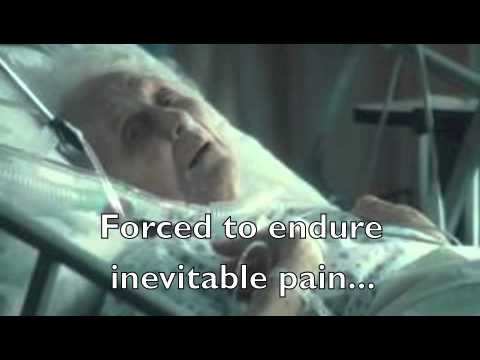 “Do no harm” is the clarion call of many of the voices against assisted dying. Doctors must not be asked to be involved in the death of a patient. After all, they aver, that is what the Hippocratic Oath says. In reality, doctors pledge no such thing. “If it is given me to save a life, all thanks. But it may also be within my power to take a life; this awesome responsibility must be faced with great humbleness and awareness of my own frailty. Above all, I must not play at God.” This is part of the oath that is used by most medical schools in North America. It contemplates taking life as much as saving it. Some have argued no medical practitioner should be asked to take the life of another against his will. Fine. If doctors or patients have a moral objection, by all means do not participate. But to impose one’s own values on another, without regard for that person’s pain or poor quality of life, is high-handed and indeed playing God. Doctors, medical systems and governments must remember that the patient is supposed to be at the centre of everything they do.
In modern democracies it is reasonable to expect to live 80 years as an average, and more than 100 as an outlier. We are now able to prolong life, but with the result that in some cases a person can suffer in pain for many decades. For those with no hope, living out their lives in pain is intolerable. Opponents of assisted dying (or dying with dignity) often use terms that are inflammatory and irrelevant. The fudging of terms and lack of clarity are often intended to promote public policy that is intellectually disingenuous and someone have assumed that people can take their own lives at any point without hassling others. Another common assumption is that pain can be managed. Both assumptions are wrong.
When you cannot get out of bed and cannot move a muscle, you are at the mercy of others. The terror of what may happen, of the pain that will come in the next moments, is worse than an Arctic night in winter and much longer. For someone those moments turned into hours, hours turned into weeks and weeks turned into months. For some, the months turn into years.
Peace of mind for many is to know that the terror can be mitigated through empowerment. Susan Griffith, who travelled from Winnipeg, Manitoba to Switzerland to avoid the inevitability of her diagnosis. Had she had the assurance of more power over her own fate, perhaps she would have lived months longer, even years. We will never know. She did not want to take the risk of waiting and becoming incapacitated and unable to travel. Better to die on her own terms in a distant country than to live with the unceasing terror of impending doom.
Currently, many thousands of people starve themselves to death each year in nursing homes. Another type of horror is the practice of nurses and doctors quietly increasing morphine drips without consent and without accountability. It is difficult to prove empirically, as anyone who admits to this “nudge nudge, wink wink” approach to end-of-life care would be in jail. But we know it happens. Anyone who works in geriatric or palliative care will acknowledge this.
Some of the arguments against assisted dying seem to rely on the idea that the collective good is more important than individual autonomy. The logic sounds rather communist and the lowest common denominator becomes existence, not living. Most people in the West take a “live and let live” approach to social issues, as do a large share of the members of any conservative party. But within those parties the social conservatives are more organised than those in the “live and let live” category.
Sometimes social conservatives push out the libertarians or alienate fiscal conservatives and the other factions. At last week’s Canadian Conservative policy convention in Nova Scotia, this happened once more, as the party strengthened its position against assisted dying, using the term “euthanasia”, as if they were one and the same thing. But euthanasia is murder, whereas assisted dying is the conscious decision of an individual based on their own values.
Slippery slopes are common in Canada. This is particularly true on hockey rinks and Canadian roads in winter. A slippery slope is also one of the strongest arguments against assisted dying. However, the way to prevent a slippery slope of unintended results is through robust legislation. In liberal democracies debate goes back and forth and over time there is incremental change for the better. The fact that people have a different point of view on these issues is a strength.
Creating a society where each person can reach their full potential as a human being by living happy, long and productive lives is the greatest goal of humanity. Put another way, one could say ideally we could live a long life from birth to death with minimal suffering and maximum freedom. Assisted dying is needed to reach this goal for the individual and for those who love their fellow humans.

