![[personal profile]](https://www.dreamwidth.org/img/silk/identity/user.png) paserbyp
paserbyp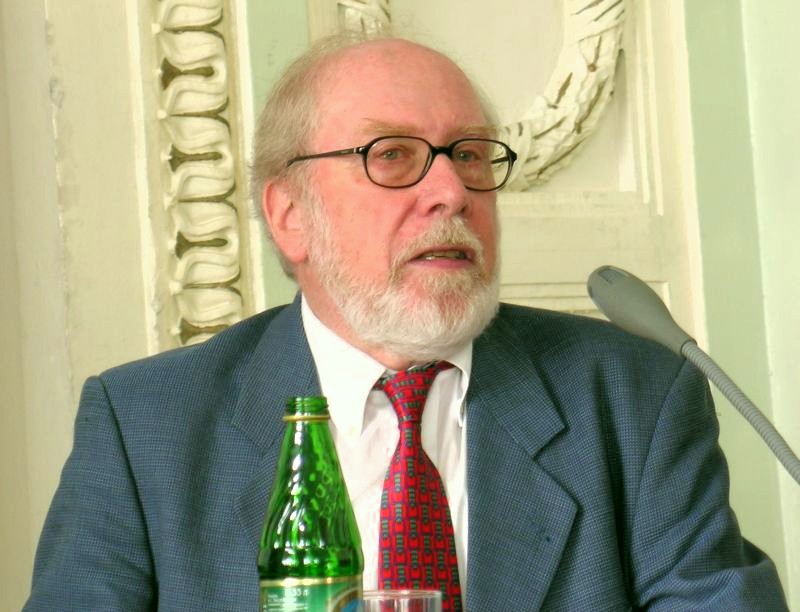 After earning a bachelor’s degree in electrical engineering, followed by master’s and Ph.D. degrees, Niklaus Wirth began his career in teaching — first at Stanford University, then at his undergraduate alma mater, the Swiss Federal Institute of Technology (ETH), where he remained from 1968 until his retirement in 1999.
When tasked with starting the school’s computer science department, Wirth found the programming languages available at the time too complex — so he created his own. He released Pascal and its source code to the community in 1970 and introduced it to the classroom in 1971.
The result was a success, recalled Wirth: “It allowed the teacher to concentrate more heavily on structures and concepts than features and peculiarities — that is, on principles rather than techniques.” Pascal became an introduction to programming for generations of students — though it was not merely an academic exercise.
“I do not believe in using tools and formalisms in teaching that are inadequate for any practical task,” said Wirth. “[Pascal] represented a sensible compromise between what was desirable and what was effective.”
During his time at ETH, Wirth took two sabbaticals to work at Xerox PARC. There, he encountered the Alto computer, his first time using a personal computer that he didn’t need to timeshare with others. The experience inspired him to return to Switzerland and build his own personal computers and their accompanying software. Languages he developed for these computers included Modula-2 (1979) and Oberon (1988). Ultimately, Wirth was his own best student: “One learns best when inventing,” he said.
Wirth was honored in 1984 with ACM’s Turing Award and in 2004 as a Computer History Museum Fellow. He died at 89.


