![[personal profile]](https://www.dreamwidth.org/img/silk/identity/user.png) paserbyp
paserbyp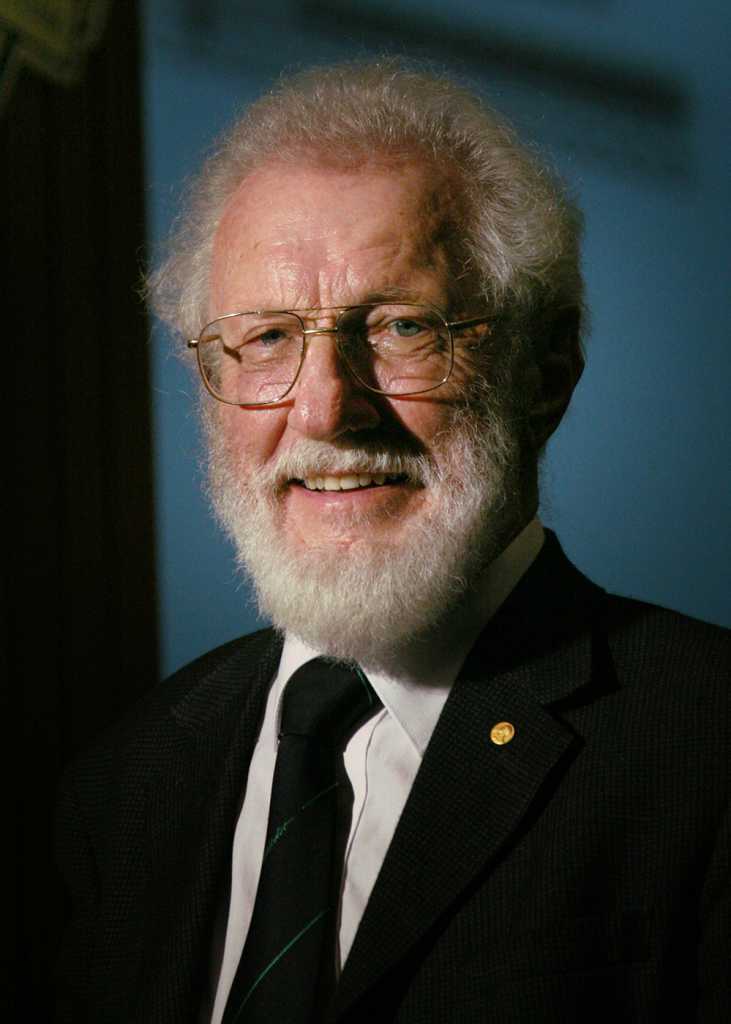 Some inventors have ideas ahead of their time; it takes decades for technology and society to catch up. That’s why it wasn’t until 2000 that Herbert Kroemer received the Nobel Prize in Physics for his work in heterostructures dating back to the 1960s.
Kroemer earned his Ph.D. at the age of 23 before joining a semiconductor research group in the German postal service in 1952. Charged with improving the rate and reliability of transistors (still fairly new at the time, having been invented in 1947), Kroemer proposed improvements that required technology that did not yet exist. Kroemer’s proposals were eventually implemented in what became known as heterostructure transistors.
In 1963, while working at one of Silicon Valley’s first high-tech companies, Varian Associates, Kroemer recommended using heterostructures for lasers as well, enabling them to operate continuously at room temperature. He received the patent for his idea in 1967, which led to the creation of laser diodes — a technology with applications both small (disc players, barcode scanners) and large (satellite communications, fiber optics).
In 1976, after eight years on the faculty at the University of Colorado, Kroemer moved to University of California, Santa Barbara, where he remained until his retirement in 2012.
Kroemer once said, “Small steps didn’t really interest me. I was interested in big steps.” Those big steps earned him not only the 2000 Nobel Prize, but also the 2001 Grand Cross of the Order of Merit of the Federal Republic of Germany and the 2002 IEEE Medal of Honor. He was 95 when he passed.


