
paserbyp: (Default)
After Indiana researchers demonstrated earlier this month that wireless highway EV charging works, Florida confirms it's breaking ground on another highway test in 2026.

In 2026, Florida will break ground on a highway that can wirelessly charge EVs at speed in a small-scale test that could have big implications for the future of mobility.

The highway is actually just a 3/4-mile portion of a larger construction project, the 4.4-mile State Road 516 (SR 516) Lake/Orange Expressway.

The Central Florida Expressway Authority (CFX) is building SR 516 in three segments. The first one, as shown on the map, will feature wireless charging technology. The highway will be open to the public when it's finished in 2029, but the charging system will only work on "specially equipped vehicles...for initial testing of the charging lane".

It remains to be seen if the project will focus on charging trucks or passenger vehicles; recent tests elsewhere have focused on trucks. In October, France activated a highway that can wirelessly charge trucks in partnership with Electreon(More details:https://ir.electreon.com/2025-10-30-Frances-wireless-charging-highway-breakthrough-marks-turning-point-for-electric-freight-trucking).

In 2023, the state of Michigan also announced that it had collaborated with Electreon to install a quarter-mile wireless-charging public roadway in Detroit for testing purposes. The Michigan Department of Transportation (MDOT) said it planned to request bids in 2024 to rebuild part of Michigan Avenue with inductive charging installed, but that does not appear to have happened.

In a major milestone earlier this month, however, researchers at Purdue University completed the first successful wireless highway charging test in the US, in partnership with the Indiana Department of Transportation (INDOT). Their system charged a semi truck traveling at 65mph, delivering 190 kilowatts of power, or more than enough for smaller vehicles as well.

"This is a system designed to work for the heaviest class of trucks all the way down to passenger vehicles,” says Aaron Brovont, a research assistant professor in Purdue’s Elmore Family School of Electrical and Computer Engineering.

While wireless charging is common for smaller devices, such as mobile phones, it has not yet become mainstream for electric cars. Their larger batteries pose an engineering challenge, especially when traveling at high speeds on a highway. "Because vehicles travel so much faster on highways than city roads, they need to be charged at higher power levels," says Purdue.

However, there's no question that wireless charging would be an improvement over wrangling with clunky power cords. It's also easier to make autonomous since the car can park itself over a pad and begin powering up. That's likely why Tesla plans to wirelessly charge its future robotaxis. CEO Elon Musk remarked on stage in 2024 that it was "high time" the company made that change. In April 2025, Tesla said it's also exploring wireless charging for its V4 Superchargers, but we haven't seen any yet.

Passively powering up while driving would be even better—science fiction turned reality.
paserbyp: (Default)
A failure to properly protect access to its AWS environment is one of the root causes of the recent massive Volkswagen data leak, according to a presentation on the incident at the Chaos Computer Club on Dec. 27(More details: https://www.youtube.com/watch?v=gKvtJiU-mi4&list=PL_IxoDz1Nq2YICxl-KtTHOjEwxIOIsPrs&index=28).

But the security analyst who helped expose the leak said the $351 billion car manufacturer violated its own terms of service as well as regulatory requirements, especially GDPR, by not truncating or encrypting sensitive customer data from more than 15 million enrolled vehicles.

“They were collecting far too much data,” an IT security analyst who goes by the name of Flüpke told the audience. “If you want to evaluate battery safety, then you don’t need location data.”

The data VW collected, he noted, included a wide range of information, including user data such as name, email address, birthdate and physical address, car data such as VIN, model, year, and full user ID, in addition to EV data points such as odometer, battery temperature, battery status, charging status and warning light data.

The problem of vehicles retaining terabytes of sensitive information about their drivers is hardly new, but it has gotten much worse recently partly because electric vehicles (EVs) collect far more information. Reports of vehicle data retention problems started surfacing more than four years ago.

The issue is that car manufacturers are required to retain some of that data. For example, Flüpke pointed out that the European Union has required some vehicle data collection and sharing since 2018, as part of an EU effort to automatically send help to a vehicle involved in a serious accident.

Flüpke said that he found the VW data problem by combining various coding tools, including Subfinder, GoBuster and Spring. Using the tools, Flüpke said that he was able to retrieve the heap dump from the VW internal environment because it was not password protected. A heap dump lists various objects within a Java Virtual Machine (JVM), which can reveal details about memory usage. That is supposed to be used for monitoring performance metrics and for introspection examinations.

Within that heap dump were listed, in plain text, various active AWS credentials. When Flüpke confronted VW with the discovery of those credentials, he quoted the company as saying, “the access to the data happened in a very complex multilayered process.”

While that is true, Flüpke said, and the backend is not meant for end users, rather used for token exchange, “you could take an arbitrary userID to generate a JWT token, which is an auth token without a password. That is useful because you can give it a userID and suddenly you are that user. We can’t pilot cars remotely with this, but we can authenticate with an API from this identity provider and access user data.”

Data journalist Michael Kreil, who also analyzed the data, said during his presentation at the conference that the 9.5TB of event data included geodata coordinates, some of which had accuracy within 10 centimeters. It revealed where people went to work, where they shopped and when, what schools they drive their children to, and information about where law enforcement agents live.
paserbyp: (Default)
Tesla is set to reveal its long-awaited robotaxi prototype at its "We, Robot" event on Oct. 10. Based on prior events, Tesla will likely livestream it on YouTube and X...

Originally scheduled for Aug. 8, the event was quietly pushed to October and will be held at Warner Bros. Studios in Los Angeles. We expect some on-stage theatrics given the setting. Will CEO Elon Musk give us another memeable moment?

Tesla doesn't always stick the landing on its reveals. The Teslabot unveiling in 2022 fell flat when the robot came out on stage, made a "raise the roof" motion, and then walked backstage. That was it, though it was perhaps a step up from the guy in a leotard the year before.

The robotaxi reveal could offer us a bit more, especially since it has serious implications for Tesla's stock price and, if all goes according to plan, the general public.

The idea is that anyone will be able to "summon" a robotaxi (or "Cybercab," as Musk referred to it on a Q1 earnings call) through the Tesla app. A month ago, Tesla updated the existing summoning function for its Full Self-Driving (FSD) software, which will likely port over to the Cybercab.

There's just one tiny problem: Tesla does not have regulatory approval to operate fully autonomous vehicles in the US. FSD technically qualifies as Level 2 on the autonomous scale, with Level 5 being the highest.

Other companies are further ahead, including Google-backed Waymo and General Motors-backed Cruise, whose vehicles both qualify for Level 4 autonomy. Waymo is currently running in Los Angeles, Phoenix, and San Francisco, with plans for an Uber matchup in Austin next year.

Cruise recalled its self-driving vehicles from multiple US cities in 2023 following a pedestrian-involved collision, but they are now slowly returning to the road with humans behind the wheel, for now. It also plans to work with Uber next year.

In California, where Tesla has a major presence, the company currently has a permit to test with a safety driver, according to the Department of Motor Vehicles. Seven other companies, including Waymo, have permission to test without a driver.

So Tesla has some catching up to do. The company posted its AI roadmap for the end of this year and early 2025, and it did not include any robotaxi-specific projects. It did, however, include expanding FSD, which was most recently enabled for the Cybertruck, and got regulatory approval in China and Europe.

Tesla may offer a robotaxi release date this week, but will more likely focus on the vehicle and its technology. In 2022, Musk teased Tesla robotaxis without steering wheels or pedals, but something like that may also face regulatory hurdles. An early patent filing also mentions a self-cleaning system to keep things tidy between rides.

Tesla could also cover other non-robotaxi updates. Fans are eagerly awaiting information on the Roadster sportscar, which is supposedly due to go into production in 2025 after being pushed back from 2022. And what about that $25,000 Tesla?

Roadblocks

Jul. 21st, 2024 09:55 am
paserbyp: (Default)
In a recent test of Waymo's robotaxis in Los Angeles, the lack of autonomous rides to LAX was a big drawback. The service is also not available for pick-ups or drop-offs at San Francisco International Airport (SFO) thanks to a separate permitting process, but executive emails show that Waymo is forging ahead despite recent setbacks.

Though Waymo got permission to operate commercially in LA, the San Francisco Peninsula, and on San Francisco freeways in March, it needs a separate approval from the San Francisco Airport Commission to operate there. That was rejected last year, but according to emails Waymo execs are once again pushing airport officials for permission to operate its robotaxis at SFO.

“Waymo riders in the Bay Area consistently ask Waymo to provide service to SFO. We would like to partner with airport leaders and staff to work towards that future goal," Waymo Chief Product Officer Saswat Panigrahi wrote to SFO General Manager Ivar Satero in April.

Waymo would need to map SFO before it provides service there. It got preliminary approval last year, but that was later delayed. SFO officials have indicated they want to see how Waymo performs in other areas before allowing it at the airport.

"We would first like to see them gain more experience safely serving our surrounding communities before entertaining any activity, even mapping, at the airport," SFO spokesperson Doug Yakel told...

Complicating matters further, SFO may need to "create a new permit structure, similar to what we did 10 years ago for companies like Uber and Lyft," Yakel says in the emails.

For now, Waymo is doing overnight curbside pickups and drop-offs at Phoenix Sky Harbor International Airport.

In additional, Zoox operate a fleet of hybrid Toyota Highlanders to map, test, and validate their autonomous driving technology in Las Vegas, Nevada.

8/8

Apr. 7th, 2024 09:46 am
paserbyp: (Default)
According to Elon Musk, we're just a few months away from a Tesla robotaxi. The X owner on Friday tweeted: "Tesla Robotaxi unveil on 8/8."
The news comes at the same time Tesla is reportedly scrapping its plans for a low-cost EV. During an earnings call in January, Musk said that production of its next-generation EVs would begin by the end of 2025, with the potential for a $25,000 model. (The Model 3 is currently its most affordable model at just under $40,000.)

Tesla is facing strong competition from Chinese electric vehicle makers that can produce EVs priced as low as $10,000. Instead of launching a low-priced vehicle, Reuters says Tesla is instead going “all in” on the robotaxi. Later, Musk tweeted that Reuters was "lying," though he didn't specify what part of the report was false.

Musk’s tweet announcing the unveiling of the robotaxi came a few hours after Reuters published its report. But Musk has been talking about robotaxis for several years. In a 2022 earnings call, Musk said robotaxis will be "a very powerful product where we aspire to reach volume production of that in 2024."

At the time, Musk said Tesla robotaxis would be manufactured without steering wheels or pedals, adding "there are a number of other innovations around it that I think are quite exciting." It's unclear if regulators will allow that; many require human drivers behind the wheel, at least during the initial testing phase. In California, where Tesla has a major presence, the company currently has a permit to test with a safety driver, according to the California Department of Motor Vehicles.

In Texas, where Tesla is now headquartered, a 2017 law allows for driverless vehicles, but as Texas Monthly notes, there's little oversight of that law, which also cedes control to the state versus the cities in which these robotaxis will be operating.

On X, Musk pushed back on arguments that regulators will be the biggest roadblock to getting Tesla robotaxis on the road. In response to someone countering that "The biggest factor by far is making the tech work well," Musk responded: "Exactly."
paserbyp: (Default)
As autonomous vehicles become increasingly popular in San Francisco, some riders are wondering just how far they can push the vehicles’ limits—especially with no front-seat driver or chaperone to discourage them from questionable behavior.

For some, that’s a welcome invitation to test the autonomous vehicles’ limits. Megan, a woman in her 20s, took her first robotaxi ride on a recent late-night excursion. It was also her first time having sex in a driverless vehicle. She is not providing exact dates of the riders’ debauchery to protect her privacy...

“We got in and just got straight to it, making out,” said Megan, who got into the Cruise wearing nothing but a robe. “One thing led to another, and he made sure that I was taken care of, if you will. … I was like, ‘I have no underwear on, and I am ready to go in this kimono.’ And I was using his slippers that were like five sizes too big.”

Her accomplice? A man in his 30s, whom I’ll call Alex. By his estimates, Alex has performed at least six separate sex acts in robotaxis, ranging from impromptu make-out sessions to “full-on sex, no boundaries activities” a total of three times in a Cruise car.

“I mean, there’s no one to tell you, ‘You can’t do that,’” he said, laughing. “It gets to the point where you’re more and more and more comfortable, and if you’re with someone, like a more serious partner, it can escalate to other activities.”

I had spoken to four separate Cruise car riders who said they’ve had sex or hooked up in the driverless vehicles in San Francisco over recent months and have provided ride receipts. Also I was unable to find a source who said they’d had sex in a Waymo.

“The vast majority of our riders are respectful and follow our rider rules,” a Waymo spokesman said.

It’s not the first time this creative use of self-driving cars has come up: After Tesla released its autopilot feature nearly a decade ago, CEO Elon Musk went viral for reacting to a Pornhub video of a couple having sex in a Tesla while it was driving on autopilot.

Turns out these rumblings of covert robocar hook-ups might have some basis in science: A little-known 2018 study predicted that more autonomous vehicles would mean more sex on the road—and potentially other unseemly behaviors you likely wouldn’t want your Uber driver to bear witness to.

“It seems like I’m a trailblazer,” Alex said. “It’s also fun to realize that this is like the first place you can do this in the country—the first autonomous vehicles that exist.”

The rules and regulations surrounding robotaxis are murky, largely because the industry is so new. Here’s what you can and can’t do in a robotaxi, according to Cruise and Waymo experts, and a couple who has tested the limits of autonomous vehicle debauchery.

How much can you get away with in an autonomous vehicle if they’re effectively window-covered hotel rooms on wheels full of cameras that never stop recording?

“It was really funny because the Cruise got quite hot and fogged up to the point that the windshield was completely fogged over—in any other context, in any other vehicle, that would be an actual problem,” Alex said.

Unfortunately for the debaucherous among us, robotaxi companies currently use pretty extensive camera surveillance inside and outside of their cars.

“We record video inside of the car for added safety and support,” Cruise states on its website. “If something happened during your ride, we might review the recording to better understand what happened. We only record audio during active support calls.”

The company also told that it is in the “early stages” of developing new sensor features in its Origin cars—the larger, bus-like vehicles—that can detect trash or items left behind.

A Waymo spokesperson said its team might review recordings if there are concerns about cleanliness, safety, crashes or missing items. Yet these surveillance tactics have been met with resistance, particularly from those concerned about how the private companies will use footage collected from previous rides. In San Francisco, police have already made requests for driverless car footage from Waymo and Cruise to help solve crimes, according to Bloomberg reporting.

“I definitely have had anxiety post-situation the next day being like, ‘Oh that wasn’t the best idea,’” Alex said. “There’s a concern you might receive an email or contact from Cruise” banning users from the system.

Of course, whatever happens inside a Cruise car is largely visible to bystanders who can peer into the robotaxi’s fishbowl-like cab. Megan said that during their robotaxi tryst, once their car took a spin through Golden Gate Park, the recently set-up stage lights for Outside Lands lit up the couple and their “activities.”

“In one instance, an individual outside of the car, in another car, looked in and basically had an understanding of what was happening—and he smiled,” Alex said. “It was not like a negative reaction; it was almost humorous. Certain people have a different threshold of concerns about public ‘situations.’”

But where there’s a will, there’s a way. The 2018 study about sex in autonomous vehicles notes that even as self-driving vehicle companies scale up their surveillance tactics, the truly savvy will always find a way around it—especially in privately owned cars.

“While autonomous vehicles will likely be monitored to deter passengers having sex or using drugs in them, and to prevent violence, such surveillance may be rapidly overcome, disabled or removed,” the study said. “Private autonomous vehicles may also be put to commercial use, as it is just a small leap to imagine Amsterdam’s Red Light District ‘on the move.’”

When asked, both Cruise and Waymo sidestepped commenting directly on what is or isn’t allowed in their cars. Megan and Alex, on the other hand, knew what they were up to wasn’t exactly in the terms and conditions.

“Was it the most comfortable? Was it the most ideal? Probably not,” Megan said. “But the fact that we were out and about in public, the whole taboo of it being kind of wrong made it more fun and exciting.”

Cruise, for example, pleads riders to not do anything in an AV that would “potentially make others uncomfortable” and to avoid activity that could be classified as “threatening, confrontational, discriminatory, harassing, disrespectful, offensive or inappropriate toward others,” according to its terms of service.

“We’re working hard to make sure our service is safe, clean, and open to everyone, and riders agree to do their part when they sign up to use our service,” a Cruise spokesperson said. “We will take appropriate action against anyone who violates those guidelines,” which could include suspending or terminating their Cruise accounts.

Still, it appears most of what you can and cannot do in a regular taxicab is also allowed in a Cruise or Waymo: Both companies permit eating in their cars, though the two companies say riders may have to pay an extra service fee if they leave the robotaxis trashed or dirty.

“Waymo One riders are allowed to eat and drink nonalcoholic beverages during their rides,” a Waymo spokesperson said. “There is a reasonable expectation of cleanliness from riders to not leave trash or debris, but the occasional crumbs are human nature.”

Cruise and Waymo like to tout that their cars will never drive drunk, high, or impaired—a position Cruise, in particular, has plugged in its partnership with Mothers Against Drunk Driving.

But what about passengers?

The state vehicle code is pretty clear on that front: Drivers and passengers are prohibited from drinking alcohol, smoking marijuana or possessing open containers of either substance in cars while on public roads.

A small loophole may exist Under California law: open-container laws do not apply to passengers in a “bus, taxicab, or limousine for hire.” Cruise received permits to operate paid rides in 2022, effectively making its cars driverless taxicabs. Yet the company has apparently cracked down on users its cameras have caught drinking in its vehicles.

One such passenger, a writer with popular tech social media account Whole Mars Catalog, apparently received a slap on the wrist—a written warning from Cruise—for drinking a beer can in the back seat of a Cruise car.

Waymo also explicitly prohibits substance use in its vehicles, “including bringing an open container” on board, the company states on its support site. Though this could easily be a rule required only by the private company, Waymo and other driverless car companies on Thursday won state approval to operate across San Francisco 24/7 and charge passengers for rides.

The California Highway Patrol, which regulates the state vehicle code, was unable to confirm how the code applies to robotaxis.

Both companies also urge riders not to smoke or vape in their cars, and animals are unfortunately not allowed in either’s vehicles.

As for our adventurous couple, Alex and Megan, they said they’d do it all over again.

“I was just along for the ride,” Megan said. “Literally.”
paserbyp: (Default)
In the U.S., EVs are sitting on dealer lots for far longer than their gas-powered counterparts and piling up as buyers mostly continue to overlook fully-electric cars, as Axios reports. Despite carmaker lineups filling out with new EV modelsand the production thereof ramping up, people are still worried about charging and the pricing of EVs.
The latest reports from Cox Automotive indicate that car buyers are much more interested in EVs now than in the past: 51 percent of buyers who participated in a recent Cox survey are considering buying a new or used EV, which is up from 38 percent in 2021. And Cox says that EV sales will break the 1 million mark for the first time in 2023, with sales reportedly accounting for about 6.5 percent of the entire auto market in the U.S. so far.

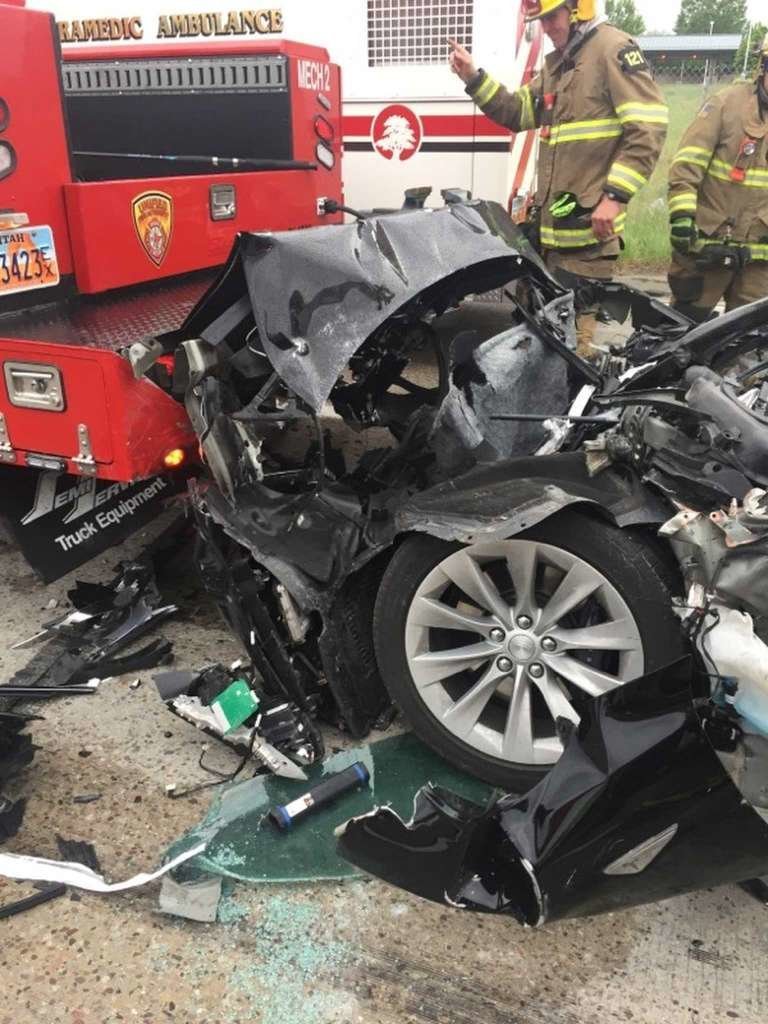
Even so, it looks like EV supply is outstripping demand by a significant margin. The nation’s fully-electric cache is reportedly up by 350 percent this year, with nationwide inventory sitting at over 92,000 vehicles. That translates to a 92-day supply of EVs, which is almost twice the current average for gas-burning cars.

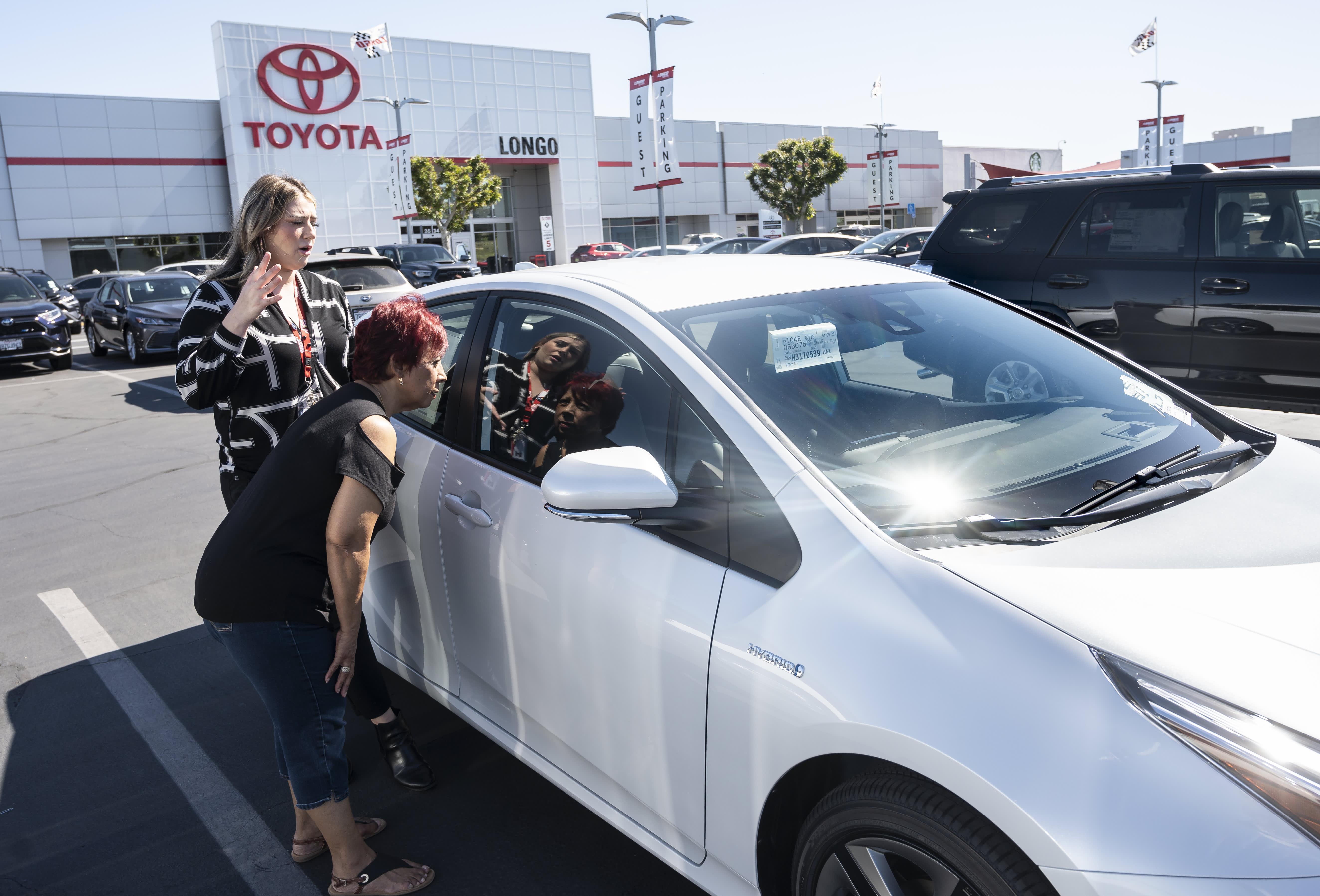
The healthy supply of EVs may not seem as alarming considering that the industry average is a 70-day supply during “normal times,” but ICE-equipped vehicles currently sit at a 54-day supply. And hybrids are having a particularly good year, with supply down to 44 days. Plug-in and traditional hybrids from Toyota are making the best of 2023, with current supply for the Prius and RAV4 sitting at under 30 days each. This reaffirms Toyota’s argument that car buyers need a “stepping stone” from ICE to EVs.

As if the popularity of Toyota’s hybrids wasn’t enough, the Japanese carmaker’s stepping stone argument may be reified by the fully-electric Toyota Bz4X sitting on dealer lots for a long 101 days — nearly double that of gas-powered cars on sale today. Then again, it might be unfair to lump in all EVs with the Bz4X, which has been beset by recalls and other issues. The thing is, the Toyota Bz4X isn’t the only EV that’s languishing on dealer lots.

The Audi Q4 e-tron, Q8 e-tron and GMC Hummer EV SUV are currently sitting at inventory that’s easily over 100-day supply. The Ford Mustang Mach-E is at a 117-day supply, although Ford says it expects a surge in demand in the coming months. We’ll see. The Genesis Electrified G80 currently comes in with the longest day supply at 350 days. In fact, the South Korean carmaker has managed to sell only 18 of the sedans within the first half of 2023. The luxury EV’s roughly $82,000 sticker price may have something to do with that, as well as the car’s ineligibility for federal tax credits given its high price.

EV prices are due to reach price parity with ICE-equipped vehicles by 2025, or so, according to industry analysts. Hmm...

Where have we heard that before?

Tesla

May. 27th, 2023 12:04 pm
paserbyp: (Default)
The German publication Handelsblatt is in possession of more than 23,000 internal files and documents from Tesla after an employee leaked the data. The files include personal information on more than 100,000 current and former employees, as well as thousands of reports of problems with Tesla's advanced driving assistance systems, Autopilot, and "Full Self-Driving."

The earliest complaints in the data trove date back to 2015, and the most recent to March 2022. Most of the complaints arise from the US, although European and Asian customer problems are also reflected in the data.

More than 2,400 complaints allege sudden unintended acceleration problems. Although Autopilot and FSD have been the focus of headlines for the last few years, during the mid-2010s there were plenty of reports of Teslas taking off on their own accord—at least 232 cases have been reported in the US, although (as often turns out in cases like these) the National Highway Traffic Safety Administration found no evidence for a hardware or software problem, instead blaming driver error.

More than 1,500 complaints allege problems braking, including 139 cases of phantom braking and 383 cases of phantom stops. In February 2022, we learned that the National Highway Traffic Safety Administration had opened a safety investigation into Tesla's phantom braking problem after it received hundreds of complaints after an article in The Washington Post drew attention to the issue. But the problem has persisted, causing an eight-car collision over Thanksgiving after Tesla opened up its FSD Beta program to all owners.

Handelsblatt says there were more than 1,000 crashes linked to brake problems and more than 3,000 entries where customers reported safety concerns with the driver assists.

The German publication even went to the trouble of contacting Tesla owners to confirm the data was correct.

A doctor from California, for example, who wishes to remain anonymous, told the Handelsblatt about an incident from autumn 2021. She was about to turn in a parking lot when her Tesla suddenly accelerated like a racing car. "I tried to steer but crashed into a cement bollard," the customer recalls.
 "He fell over, but the car didn't stop. I drove into the nearest bollard. The airbag went off and I was stunned."
Between January and October 2021, the Swiss Thomas Karl complained to Tesla about a dozen incorrect braking attempts with his vehicle. Karl was a regular customer, had been for ten years. But his new Model S made him nervous, as email correspondence with Tesla makes clear.

"Hello gentlemen, believe me that I'm starting to lose my nerve?" Karl wrote on July 26, 2021 about another incident. His Tesla had an accident on the Swiss A3 between Flums and Sargans "after being overhauled vehicle made an emergency stop that scared and worried".

According to Manfred Schon, he experienced something similar on the M14 highway. The former
 Bosch employee was on his way to a meeting in the US state of Michigan on June 1, 2019 when his Tesla "suddenly slammed on the brakes, as hard as you can imagine," Schon told the Handelsblatt. "I was pushed into the seat belt and the car almost came to a stop. Then another car hit me from behind."

The Tesla files contain similar cases in Germany. One customer complained that his Tesla had "driven into a median barrier on the freeway". The reason was the autopilot's emergency braking. Another reported to customer service about his Model S: "Drives into oncoming traffic."

Beyond the customer complaints, the data leak also shows how Tesla responded to these problems—by committing to as little as possible in writing.

For each incident there are key points for the "technical review". The employees who enter this review into the system regularly make it clear that the report is intended for "internal use only". Each entry also contains the note in bold type that information, if at all, may only be passed on "VERBALLY to the customer".
"Do not copy the report below into an email, text message or leave it in a voicemail to the customer," it continues. Vehicle data should also not be released without permission. If, despite the advice, "a legal involvement cannot be prevented", this must be recorded.

Customers that Handelsblatt spoke to have the impression that Tesla employees avoid written communication. "They never sent emails, everything was always oral," says the doctor from California, whose Tesla said it accelerated on its own in the fall of 2021 and crashed into two concrete pillars.

As anyone who covers Tesla would be able to tell you, Handelsblatt got no reply from the company when it queried it on the problems listed above. However, the automaker did demand its data back, according to an accompanying note from Handelsblatt's editor.

More details: https://www.handelsblatt.com/unternehmen/industrie/elektromobilitaet-mein-autopilot-hat-mich-fast-umgebracht-tesla-files-naehren-zweifel-an-elon-musks-versprechen/29166564.html

Robotaxi

Feb. 15th, 2023 10:50 am
paserbyp: (Default)
Amazon's Zoox is claiming a world's first by deploying a robotaxi on public roads while only carrying passengers.
The Zoox robotaxi is purpose-built with no steering wheel or pedals and can transport up to four passengers at up to 35mph. The maiden run on public roads was carried out on Feb. 11 and transported passengers (Zoox employees) along a one mile route at the company's headquarters in Foster City, California.

Zoox says this is "the first-time in history that an autonomous, purpose-built, FMVSS-compliant robotaxi is on public roads without a safety driver."

Although that may seem like a small achievement from the outside, getting to this point meant Zoox had to complete rigorous testing on private roads and gain approval from the California Department of Motor Vehicles (DMV) to operate on public roads. Currently, Zoox says it's "the only purpose-built robotaxi permitted on California public roads that is self-certified to the Federal Motor Vehicle Safety Standards (FMVSS)."

For now, the service will remain exclusive (and free) to Zoox full-time employees, which allows the company to continue gathering data on how the vehicle performs autonomously over an extended period of time. Once "additional government clearances" have been secured, Zoox intends to roll out its service to the general public.

Zoox started life as a startup developing a robotaxi, but was acquired by Amazon back in 2020 to "help bring their vision of autonomous ride-hailing to reality." The purported $1.2 billion acquisition is clearly bearing fruit and Amazon must be considering using the autonomous vehicle for more than just passenger transport in the future as it gains more public road approvals.
paserbyp: (Default)


One thing people like most about owning an electric vehicle is never having to stop at a gas station. For most EV owners, plugging in overnight gives them the equivalent of a full tank of gas every morning. Unfortunately, because EVs are still a new and emerging technology, there is a bewildering array of charging systems and connectors that need to be navigated—either when charging at home or at one of the increasing number of public charging stations.

Charging a lithium ion battery is not as simple as charging the traditional lead acid starting battery that most gasoline cars have under their hoods. A lead acid battery charger is relatively simple and charges the battery with a constant current until an upper charge voltage is reached. At that point, the current tapers until it reaches a low level, when the battery is fully charged. A float or “trickle” charge can be used to keep a lead acid battery topped up almost indefinitely. Lithium ion batteries are much more sensitive to charging conditions and cannot accept overcharging or trickle charging. They typically charge to 4.2 volts +/- 50 mV per cell. Prolonged charging at too high a voltage can cause the lithium ion cells to catch fire if safety devices don’t interrupt charging. On the other hand, charging to less than a full charge (say 80%) can prolong the life of a lithium ion battery. When done properly, a lithium ion battery is charged at a constant current until its voltage reaches its maximum. Then, the current decreases, tapering until it reaches about 3% of the rated current for the battery cells. The current at which the lithium ion battery can be charged depends upon its construction. Charging at a higher current can reduce the time in which the voltage reaches its maximum, but not the time during which the current tapers. If charging to less than the maximum capacity, however, a higher current charging can be used to reduce the time the vehicle is connected to the charger. It is also worth noting that when the lithium ion battery is fully charged, it cannot be “trickle” charged like a lead acid battery.

Of course, for the average EV user, none of this is important and it is all incorporated into the components that make up a home or public charging system. The first important thing to know is that the charging of an EV, under most circumstances, takes place using an on-board charger installed in the vehicle. This charger connects to AC power from a plug on the wall and converts it into DC power that is used to charge the vehicle’s on-board battery pack. There are two levels of charging for most home and public charging stations. Level 1 uses a standard 120-volt household power outlet (in the U.S.) and is the slowest type of charging. Because most household circuits are limited to 20 amps of current, the maximum power available through Level 1 charging is 1.9 kilowatts (kW) at 16 amps. Typically, using Level 1 charging, about 4 miles of range are added for every hour of charging. This is practical for overnight charging, but not for topping up (or so-called “opportunity charging”) when traveling any distances. Level 2 charging uses 220-volt household current, such as might be used for an electric dryer or oven. Level 2 requires a special plug at the end of a cable that goes from a dedicated charging station to a port on the EV. The charger that converts AC to DC is still on-board the vehicle, but the Level 2 charging station is often hardwired into the household or business 220-volt AC circuit. Different EVs have on-board chargers of varied sizes. Early Nissan Leaf models, for example, had 3.3 kW chargers, which would allow about 12 miles of range per hour of charging. Later Leafs came with 6.6 kW chargers, which effectively doubled the range per hour. On the other extreme, Tesla models can charge at up to 20 kW, adding up to 58 miles per hour of charging. Level 2 chargers are available online and at home improvement stores. They cost between $500 and $1,000. Level 2 chargers require installation by a certified electrician (which can cost several hundred dollars or more), although home installation is possible by an experienced home builder. Dan, who lives in Raleigh, NC, went the DIY route: “It was easy to install; I just ran a box off the main outside panel and ran a wire across the house to the charger. Works like a charm,” he told Design News. The standard connector for Level 2 charging is the SAE J1772 EV plug. Charging at home could be difficult if you don’t have a garage, but public Level 2 chargers are becoming common in cities and towns. More are being added nationwide nearly daily.

The fastest way to recharge an EV is using DC Fast Charging (DCFC), also called Level 3 charging. Instead of using an onboard charger that converts AC to DC, direct current comes directly from the charging station in DCFC. Typically, DCFC charges at 50 kW and can provide 75-100 miles of range during a 30 minute charge. Level 3 charging takes the typical EV out of the daily commuter category, making a trip of several hundred miles during a day a real possibility. Tesla has its own DCFC system, called “Supercharger.” It can charge at up to 120 kW, providing up to 170 miles during a 30 minute charge. Dumping huge amounts of energy into an EV battery can reduce its life, and many DCFC systems limit the fast charging to 80% of capacity. They may also reduce the charging rate on sequential charges during a single trip. Tesla has its own DC Fast Charging system called "Supercharger". Unfortunately, the plug systems used for DCFC are not completely standardized. DCFC was first developed in Japan for the Nissan Leaf and Mitsubishi MiEV and uses the CHAdeMO (CHArge on the Move) standard and plug. In 2012, the SAE in the U.S. launched its Combo Charging System (CCS), which is based upon the J1772 Level 2 connector but adds two DC pins for DCFC. Meanwhile, the Tesla Supercharger system has its own plug and charging protocol. Tesla has made a CHAdeMO adapter available for its owners who wish to charge at CHAdeMO stations. It is the only such adapter available right now, however. Otherwise, the three DCFC systems are, as yet, incompatible. Attempts are underway to reconcile the differences.

Profile

paserbyp: (Default)
paserbyp

January 2026

S M T W T F S
     1 2 3
45678910
11121314151617
18192021222324
25262728293031

Most Popular Tags

Syndicate

RSS Atom

Style Credit

Page generated Jan. 4th, 2026 10:16 pm
Powered by Dreamwidth Studios