Putin says his recent mobilization drafted about 300,000 men, 82,000 of whom are already in Ukraine. Another 300,000 Russians are believed to have fled to other countries to avoid the draft. The Pentagon estimated in August, before Kyiv's autumn counteroffensive, that Russia had incurred about 80,000 casualties in Ukraine, including wounded troops. "I feel like we are a country of women now," Moscow resident Stanislava, 33, told the Times. "I was searching for male friends to help me move some furniture, and I realized almost all of them had left."
Aleksei Ermilov, the founder of Russia's Chop-Chop barber shop empire, tells the Times you "can see the massive relocation wave more in Moscow and St. Petersburg than in other cities, partially because more people have the means to leave there."
The urban professionals who could blithely avoid thinking about the war over the summer did get a rude awakening when the Kremlin started pressing them into military service. The ranks of Moscow's "intelligentsia, who often have disposable income and passports for foreign travel," have "thinned noticeably — in restaurants, in the hipster community, and at social gatherings like dinners and parties," the Times reports. But ethnic and religious minorities in some regions have it worse.
In the remote far north of Russia and along the Mongolia border, in the regions of Sakha and Buryatia, mobilization rates are up to six times higher than in Russia's European regions, according to Yekaterina Morland at the Asians of Russia Foundation. Indigenous people in those regions were "rounded up in their villages" and enlistment officers scoured the tundra and "handed out summonses to anyone they met," Vladimir Budaev of the Free Buryatia Foundation told The Associated Press.
Russia already had a huge gender imbalance before the Ukraine invasion, dating back to massive battlefield losses in World War II, Paul Goble writes at Eurasia Daily Monitor. Results from the 2021 census are expected to show that Russia has 10.5 million more women than men, almost the same disparity as a decade ago — the double blow being that Russian men at "prime child-bearing age" are dying in Ukraine or fleeing Putin's draft, which will "further depress the already low birthrates in the Russian Federation and put the country's demographic future, already troubled, at even greater risk."
"The mobilization is upending families at perhaps the most fraught moment ever for Russian demographics, with the number of women of childbearing age down by about a third in the past decade" amid the country's broader population decline, Bloomberg reports. "While demographic traumas usually play out over decades, the fallout of the invasion is making the worst scenarios more likely — and much sooner than expected."
Continuing with the Ukraine war and mobilization efforts until the end of next spring would be "catastrophic" for Russia, Moscow demographer Igor Efremov tells Bloomberg. It would likely bring birth rates down to 1 million between mid-2023 and mid-2024, dropping the fertility rate to 1.2 children per woman, a low mark Russia hit only once, in the 1999-2000 period. "A fertility rate of 2.1 is needed to keep populations stable without migration," Bloomberg adds, and currently Russia is facing "immigration outflows" and serious questions about its "ability to attract workers from abroad."
Yes — and like Russia, Ukraine was already hurting demographically even before the invasion, Lyman Stone, a research fellow at the conservative Institute for Family Studies, wrote in March. "Both Russia and Ukraine have low fertility rates, but in recent years, Russia has implemented pro-natal policies that have helped the country avoid extreme fertility declines," while Ukraine has been relatively lacking in such policies as it struggled through 15 years of war and political and economic upheaval.
Given Russia's much larger population and less severe recent population decline, "Ukraine's position compared to Russia's is steadily eroding," and "this trend will continue at an even greater pace in the future as the gaps in fertility rates between the two countries grow wider," Stone predicts. But "core demographic factors like birth rates and migration rates," while important, "are not destiny," and Ukraine has "turned demographic decline into military rejuvenation" through alliance-building and the "sharp willingness" of Ukrainians to fight.
Moreover, if Russia succeeds in annexing significant parts of Ukraine, Putin will have succeeded in bulking up Russia's population — but he'll also be adding Ukraine's "unfavorable demographics" to his own problems, Bloomberg notes.
It's possible. Sometimes wars "lead to higher fertility," as when "sudden bursts of conception" occur as men deploy for battle, Goble writes at Eurasia Daily Monitor. "For example, monthly birth data from the 1940s clearly shows that U.S. baby boom began not as the G.I.'s returned from war, but as they were leaving for war." After the fighting stops, he adds, "wars may trigger a surge of nationalist ideas making people susceptible to pro-natal ideas and policies, even as so-called 'replacement fertility' often leads families to 'respond' to high-casualty events by having 'replacement' children.'"
In the short term, though, "it is likely that in conditions of uncertainty, many couples will postpone having children for some time until the situation stabilizes," Elena Churilova, research fellow in the Higher School Economics's International Laboratory for Population and Health, tells Bloomberg. "In 2023, we are likely to see a further decline in the birth rate."
And in the meantime, "downloads of dating apps have significantly increased in the countries to which Russian men fled," the Times reports, noting sharp rises in downloads in Armenia, Georgia, Turkey, and Kazakhstan. "All of the most reasonable guys are gone," said Tatiana, a 36-year-old Muscovite. "The dating pool has shrunk by at least 50 percent."
The most likely outcome is that "Putin's war will cast a shadow on Russia for a long time to come — one growing ever darker the longer the war carries on," Goble writes. Not only will the loss of Russian men to emigration and battlefield death "leave a huge hole in Russian society," but "those Russian men who do indeed manage to return will experience enormous problems," from PTSD and other health struggles to participating in a "proliferation of crime waves similar to those that followed the Afghan and Chechen wars."
The shape of "Russia's population pyramid" means "the birthrate is almost destined to decline," Brent Peabody wrote at Foreign Policy in January. Putin has said he's haunted by that fact, and "Russia's need for more people is no doubt a motivating consideration for its current aggressive posture toward Ukraine," even as "the idea that Ukrainians would sign up to be good Russians is largely delusional."
Ukrainians may not sign up to be good Russians willingly, but thousands of Ukrainian children have been spirited off to Russia to be placed in Russian "foster families," AP reports.
Ukrainian authorities say they are launching a criminal case against Russia's children's rights commissioner Maria Lvova-Belova, who said in mid-October that she herself had adopted a boy sized by Russian forces in Ukraine's bombed-out Mariupol, AP reports. U.S., British, and other Western nations sanctioned Lvova-Belova in September over allegations she masterminded the removal to Russia of more than 2,000 vulnerable children from Ukraine's Donetsk and Luhansk provinces.
Demography, and assumptions about how nations will react to demographic changes, are not exact arts, Rhodes College professor Jennifer Sciubba wrote at Population Reference Bureau in April. For example, "for years, one common argument in the U.S. policy community was that Russia's demographic troubles would curtail its ability to project power outside its borders."
Obviously, the "geriatric peace theory" was not a good fit for Russia, Sciubba adds. But more broadly, "population aging and contraction are such new trends that we know little about how states conduct foreign policy under these conditions, and we shouldn't expect aging states to act like aging individuals."
![[personal profile]](https://www.dreamwidth.org/img/silk/identity/user.png)
 The labor market is in turmoil, and finding a job is becoming an increasingly impossible task.

 It’s going to be a pretty unique year—mathematically speaking. 2025 is the rare perfect square year, meaning it’s the square of an integer: 45. Soak it in, because this will be the last perfect square year you will likely experience: The last time it happened was 1936 (the square of 44) and the next time will be in 2116 (46 squared).
 A new study by SelectSoftware Reviews reveals the percentage of workers in each state who worked remotely at least one day in the past week. This is based off US Census Bureau's Household Pulse Survey, which polled a range of demographics.
 За оптимістичним прогнозом, через десять років в Україні будуть проживати не більш ніж 35 мільйонів людей. Йдеться про адміністративні кордони 1991 року.
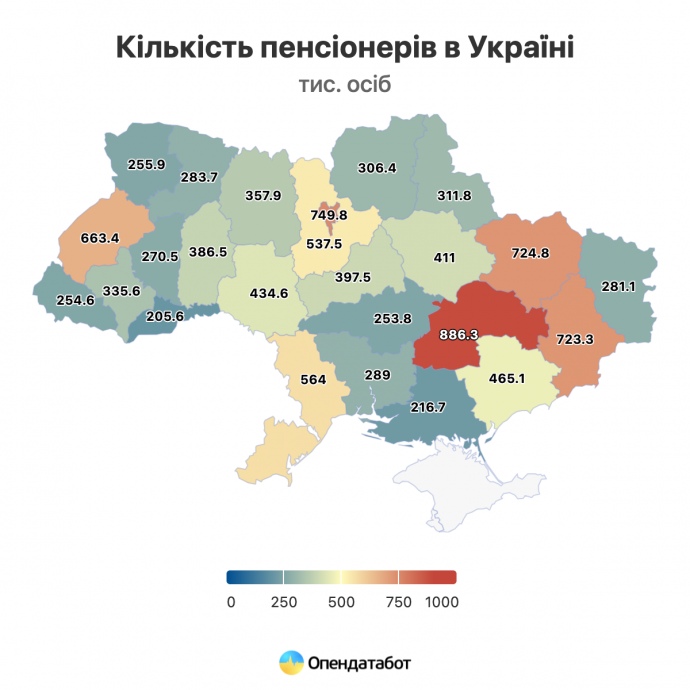 За даними Пенсійного фонду, у 1991 році в Україні налічувалося 13,1 млн пенсіонерів, за два роки їх побільшало до 14,2 млн. При цьому населення України у 1991 році налічувало 52 млн, а загальна кількість населення України у 2001 році становила 48 млн 457 тис. осіб. За роки, що минули після перепису населення 1989 року, населення України значно зменшилось і по моїм підрахункам на сьогодні(2023 рік) в Україні налічується 35 млн. населення.
